
Apple Sued Steve Jobs for Starting NeXT. Eleven Years Later It Bought NeXT to Save the Mac.
In 1985 Apple took Steve Jobs to court for leaving with five employees to start NeXT. The settlement pushed NeXT toward high-end workstations, and the operating system it built became the foundation of Mac OS X. Here is what the record actually says.
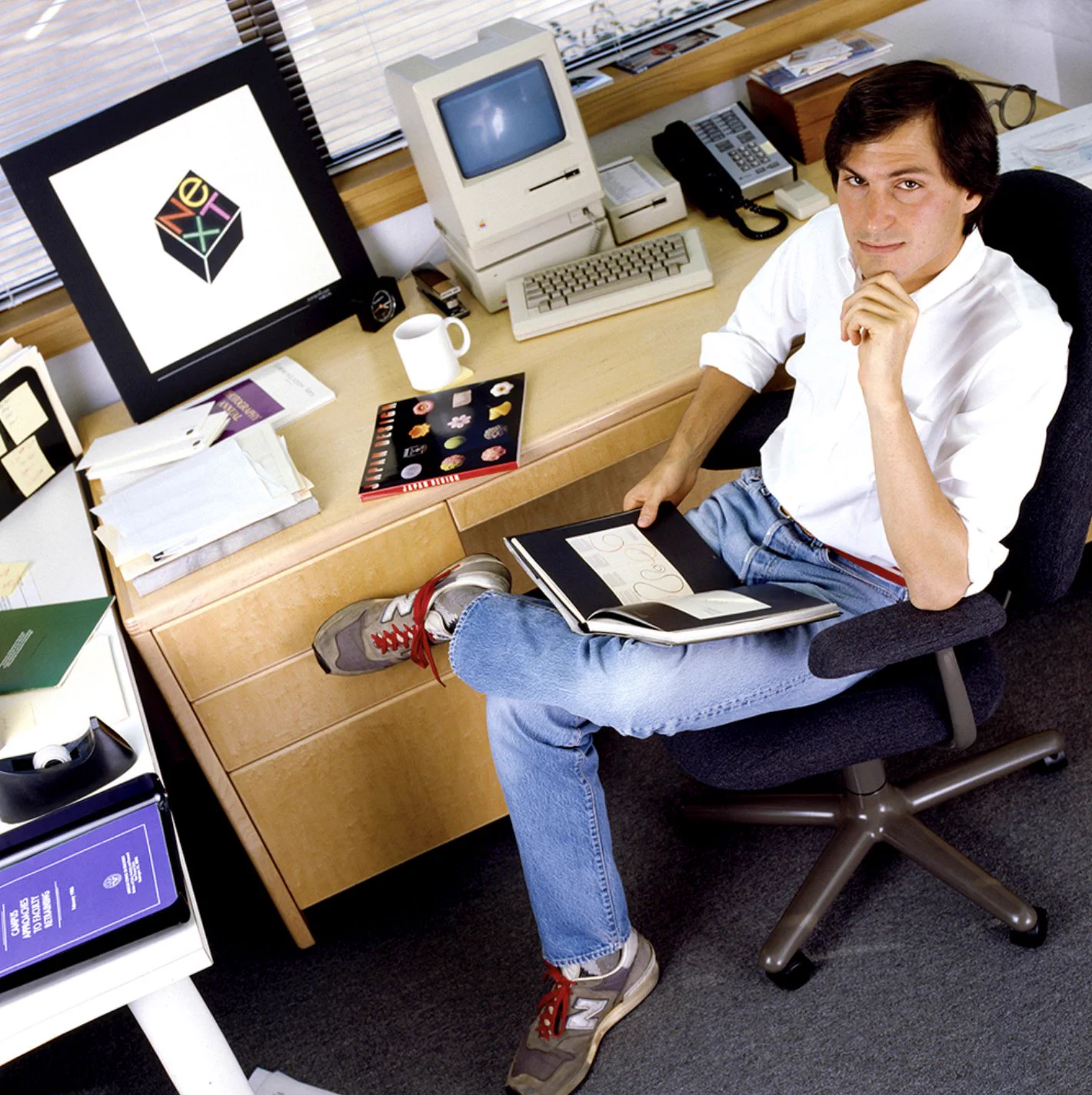
There's a version of this story that gets passed around: Steve Jobs leaves Apple, takes a handful of employees, and Apple bans him from building a Mac-compatible computer, which forces him to invent something completely new. It's a good story. Parts of it are true, and some parts are better than the legend. I went back to the sources to sort out which is which.
September 1985: Jobs walks out
By the summer of 1985 Jobs had been stripped of his operating role at Apple. He spent the time talking to universities about their ideal computer. In early September he had lunch with Nobel laureate Paul Berg, who described how hard "wet-lab" gene-splicing research was. Jobs suggested simulating those experiments on a computer, and the idea for NeXT took shape.
On September 12, 1985, Jobs told Apple's board he was going to take a few employees and start a company making computers for higher education. According to Apple Confidential 2.0, he played it down and described them as "low level" employees.
They weren't. The five who went with him were:
- Susan Barnes, senior controller for U.S. sales and marketing
- George Crow, engineering manager
- Dan'l Lewin, who ran the Apple University Consortium, the team that sold Macs into higher education
- Rich Page, an Apple Fellow
- Bud Tribble, manager of software engineering
When Jobs handed over the names, the board, which had initially talked about investing in the new company, reacted badly. Jobs resigned as chairman.
The lawsuit
On September 23, 1985, Apple sued in Santa Clara County Superior Court. Apple claimed Jobs had misappropriated company secrets and breached his fiduciary duty by planning a rival company, and recruiting Apple people for it, while he was still chairman. Wikipedia and Low End Mac (citing Frank Rose's book West of Eden) describe the complaint as accusing NeXT of "nefarious schemes" to use the cofounders' insider information. Time reported Apple's allegation that Jobs "secretly schemed" to misappropriate confidential plans for a new computer.
Jobs went to the press. His best line: "It is hard to think that a $2 billion company with 4,300-plus people couldn't compete with six people in blue jeans."
Apple said it didn't really want the fight. General Counsel Albert Eisenstat told Time "We only did this very grudgingly," and the directors were worried that shareholders could sue them if they did nothing.
January 1986: the settlement
The case never went to trial. Apple settled out of court in January 1986. Per AppleInsider, the main terms were:
- Jobs would not hire any more Apple employees for six months.
- NeXT's machines had to be more powerful than any of Apple's computers.
The second term is the one that matters. At the time, the industry divided machines into personal computers and workstations. In practice the settlement steered NeXT away from the Mac's market and toward expensive, high-end workstations.
Fact-check: what the legend gets wrong
- "Apple banned a Mac-compatible computer." None of the sources I read use the words "Mac-compatible." The documented term is the more-powerful-than-Apple requirement. That kept NeXT out of the Mac's market, but the settlement doesn't say "no Mac clones" in those words.
- "Jobs was forced to invent a new OS." NeXT was always aimed at a university workstation, powerful enough for lab simulations and still cheap enough for a dorm room. The settlement pushed it further up-market, but the clean-slate design was Jobs's own plan.
- Specific shipping-ban dates. Some retellings say NeXT couldn't ship hardware before a particular date. I couldn't find that in any of the sources below, so treat it as unconfirmed.
What NeXT built
NeXT introduced the NeXT Computer in 1988, followed by the NeXTcube and NeXTstation in 1990. They ran NeXTSTEP, a UNIX-based, object-oriented operating system that was far ahead of its time. But the machines were expensive and had little software, and they sold poorly. NeXT quit the hardware business in 1993 and became a software company.
The twist: Apple buys NeXT
By 1996 Apple was in trouble. Its own next-generation OS, Copland, had failed, and the company was looking for a replacement. It narrowed the choice to two companies founded by former Apple executives: Jean-Louis Gassée's Be and Jobs's NeXT. After a head-to-head "bakeoff," Apple picked NeXT.
On December 20, 1996, Apple announced the deal. Its press release, filed with the SEC, said NeXT would be bought for $400 million and that Jobs would return to Apple. The figure most histories use is $429 million in cash plus 1.5 million Apple shares to Jobs. The deal closed on February 7, 1997. Apple's release said elements of NEXTSTEP would become "integral features of Mac OS."
They did more than that. Former NeXT engineering VP Avie Tevanian became Apple's Senior VP of Software, and under him NEXTSTEP became the basis of Mac OS X, released in March 2001. Jobs started as an advisor and was firmly in charge by August 1997.
Why it still matters
The company Apple sued to keep from competing with it built the operating system Apple needed to survive. Eleven years after that settlement, Apple paid hundreds of millions of dollars to get its co-founder back, along with the software his "six people in blue jeans" had built.
The Mac I'm writing this on still runs on that foundation, and so does Agent!. All the AppleScript, Accessibility and Unix plumbing it uses traces back to the operating system NeXT built.
Sources
- NeXT, Wikipedia
- Sour Apples, Time (1985)
- Looking back at Steve Jobs's NeXT, Inc, AppleInsider
- Good-bye Woz and Jobs: How the First Apple Era Ended in 1985, Low End Mac
- Jobs After Apple: To NeXT and Beyond (PDF), nextcomputers.org
- Apple Computer Form 8-K, Exhibit 99.1 (Dec. 20, 1996), SEC
- Mac OS X 10.0, Wikipedia
- NeXT: Steve Jobs' dot com IPO that Never Happened, Computer History Museum
- Apple's 15 years of NeXT, AppleInsider
- NeXT, Apple Wiki